
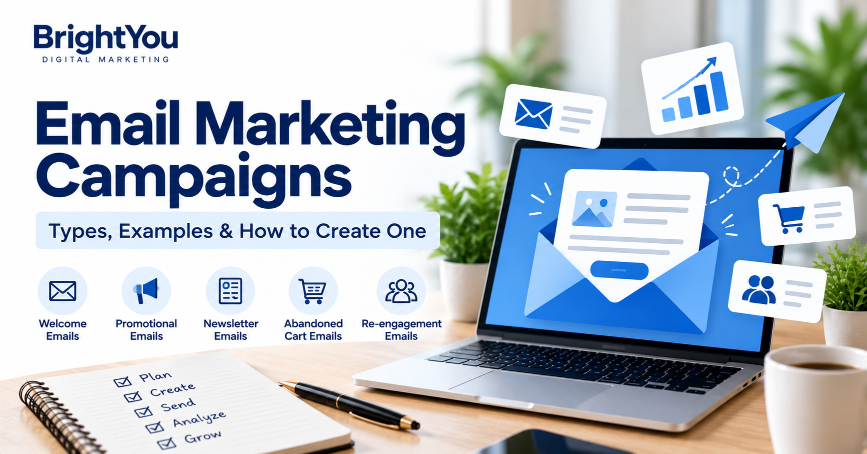
Email marketing campaigns help businesses communicate with subscribers, promote products or services, share useful information, and build lasting customer relationships. For small businesses, a well-planned email campaign can support customer engagement, website traffic, and sales without requiring a large marketing budget.
However, successful email marketing involves more than sending promotional messages. You need a clear goal, an interested audience, useful content, and a way to measure results.
In this guide, you’ll learn about the different types of email marketing campaigns, see practical examples, and discover how to plan and measure your own campaigns.
What Is an Email Marketing Campaign?
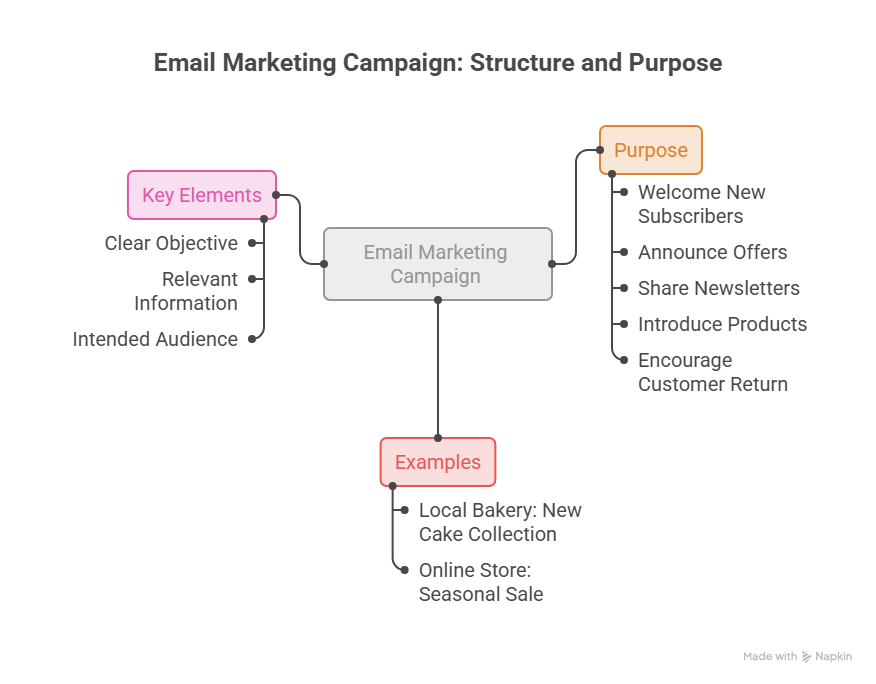
An email marketing campaign is a planned series or individual send of emails designed to achieve a specific marketing goal. Businesses use email campaigns to welcome new subscribers, announce offers, share newsletters, introduce products, and encourage customers to return.
For example, a local bakery might send an email announcing a new cake collection, while an online store might send a promotional campaign during a seasonal sale.
A successful campaign starts with a clear objective and delivers relevant information to the intended audience.
Why Are Email Marketing Campaigns Important for Small Businesses?
Email marketing gives businesses a direct way to communicate with people who have chosen to receive their messages. When campaigns are relevant and well planned, they can support several business goals.
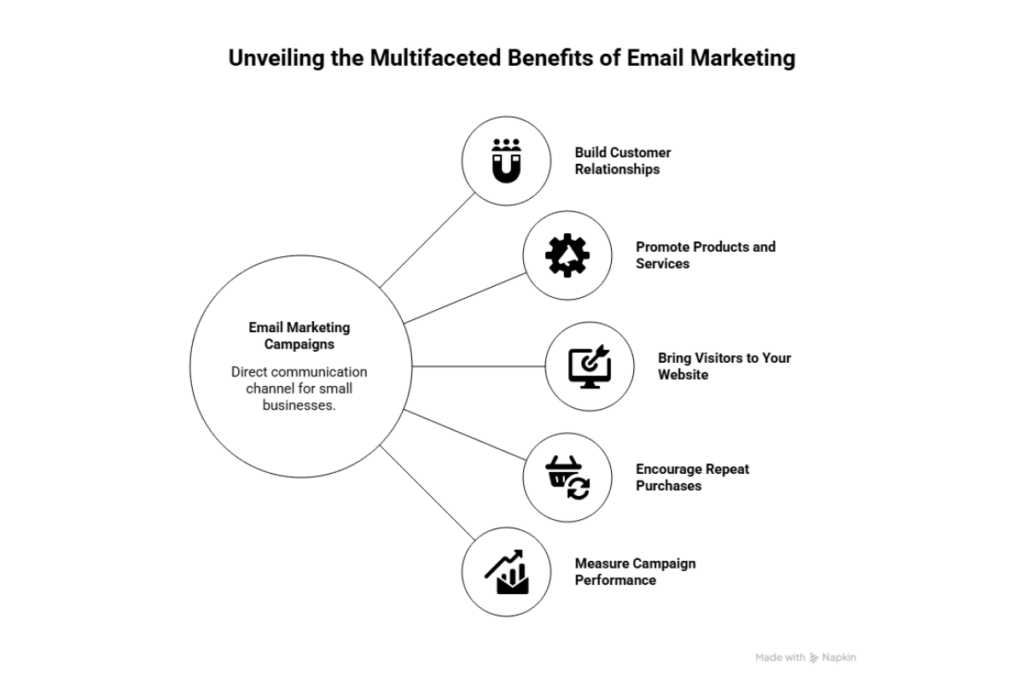
1. Build customer relationships
Regular newsletters, helpful updates, and personalized messages help businesses maintain communication with subscribers beyond a single purchase.
2. Promote products and services
Businesses can announce new products, seasonal offers, special events, or service updates to an audience that has opted in to receive communications.
3. Bring visitors to your website
An email can direct subscribers to a blog post, product page, booking page, or landing page. Relevant links make it easier for readers to take the next step.
4. Encourage repeat purchases
Follow-up emails, loyalty updates, and relevant product recommendations can remind existing customers about products or services they may need again.
5. Measure campaign performance
Email platforms provide reporting on metrics such as delivery, clicks, conversions, and unsubscribes. These insights help marketers identify opportunities to improve future campaigns.
Results depend on the audience, offer, content, deliverability, and campaign execution. Email marketing does not guarantee sales or engagement.
5 Types of Email Marketing Campaigns
Different email marketing campaigns serve different purposes. Choosing the right type depends on your business goals and where subscribers are in their customer journey.
1. Welcome email campaigns
Welcome campaigns introduce your business to people who have recently subscribed. They can explain what subscribers will receive, share useful resources, and introduce your products or services.
Example subject line: Welcome to BrightYou — Let’s Grow Your Digital Marketing Knowledge
A welcome email for a bakery could thank a new subscriber, introduce the bakery’s products, and provide a link to its menu.
2. Promotional email campaigns
Promotional campaigns communicate special offers, product launches, discounts, seasonal promotions, or limited-time services.
Example subject line: Discover Our New Festive Cake Collection
A bakery could send this campaign before a festival and link directly to a page where customers can explore the collection or place an order.
Promotional messages should explain the offer clearly and use honest deadlines and terms.
3. Email newsletter campaigns
Newsletters deliver regular updates, educational content, company news, or helpful resources. They are useful for businesses that want to build relationships over time instead of communicating only when they have something to sell.
Example subject line: 3 Simple Ways to Improve Your Website Content
BrightYou could use a newsletter to share its latest blog posts, practical digital marketing tips, and useful resources for small business owners.
4. Abandoned-cart email campaigns
E-commerce businesses can use abandoned-cart emails to remind shoppers about products they added to their carts but did not purchase.
Example subject line: Still Thinking About Your Shopping Cart?
The email could show the selected products, provide a link back to the cart, and offer assistance if the customer has questions.
This campaign requires an appropriate e-commerce setup and must follow applicable privacy and marketing rules.
5. Customer re-engagement campaigns
Re-engagement campaigns aim to reconnect with subscribers who have stopped interacting with emails.
Example subject line: Is There Anything We Can Help You With?
A business might share an important update, ask about the subscriber’s interests, or offer a preference centre so the subscriber can choose which messages to receive.
If subscribers remain inactive, respect their preferences and consider suppressing them from future marketing sends.
How to Create an Email Marketing Campaign Step by Step
Creating an effective email marketing campaign becomes easier when you follow a structured process.
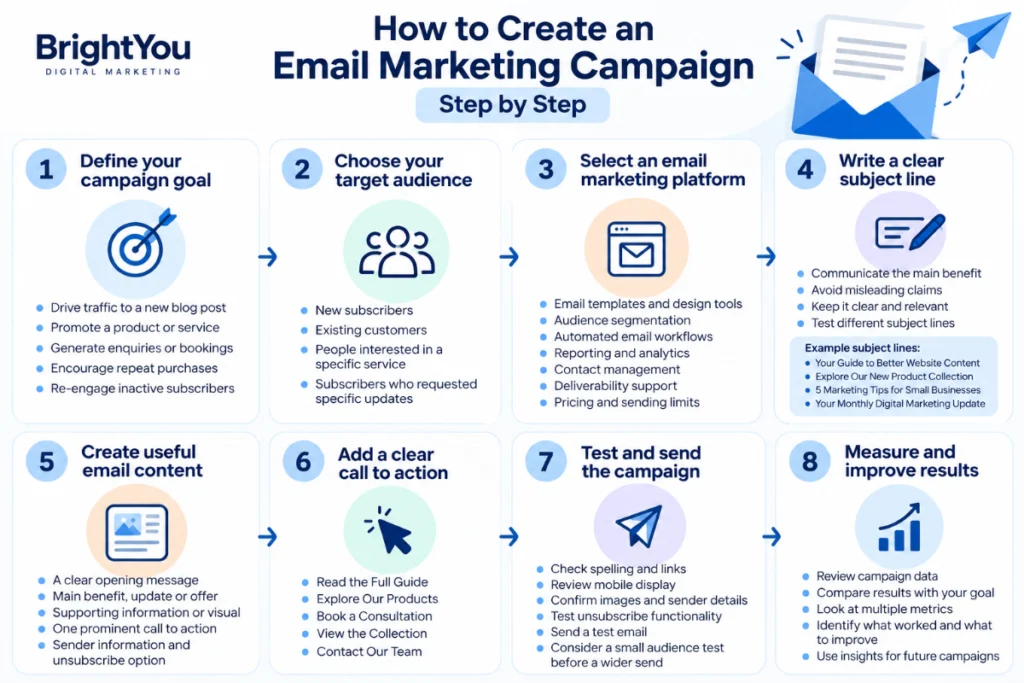
Step 1: Define your campaign goal
Start by deciding what you want the campaign to achieve.
Your goal might be to:
- Drive traffic to a new blog post.
- Promote a product or service.
- Generate enquiries or bookings.
- Encourage repeat purchases.
- Re-engage inactive subscribers.
Choose a goal that can be measured. For example, if your objective is to attract enquiries, track the relevant form submissions rather than relying only on email opens.
Step 2: Choose your target audience
Decide who should receive the campaign. Your audience might include new subscribers, existing customers, people interested in a particular service, or subscribers who have requested specific updates.
Segmentation helps you send more relevant messages to different groups. Use information that you have collected appropriately and that is relevant to the campaign.
Step 3: Select an email marketing platform
Choose a platform that fits your budget, audience size, technical requirements, and marketing goals.
Compare features such as:
- Email templates and design tools.
- Audience segmentation.
- Automated email workflows.
- Reporting and analytics.
- Contact management.
- Deliverability and domain authentication support.
- Pricing and sending limits.
Review current pricing and features directly on each provider’s website before making a decision.
Step 4: Write a clear subject line
Your subject line should communicate the main benefit or purpose of the email. Avoid misleading claims, excessive punctuation, or promises that the message cannot fulfil.
Examples include:
- Your Guide to Better Website Content
- Explore Our New Product Collection
- 5 Marketing Tips for Small Businesses
- Your Monthly Digital Marketing Update
You can test different subject lines to learn which approach works better for your audience.
Step 5: Create useful email content
Write content that supports your campaign goal and provides a clear reason for the subscriber to engage.
A simple email structure includes:
- A clear opening message.
- The main benefit, update, or offer.
- Supporting information or a useful visual.
- One prominent primary call to action.
- Required sender information and an unsubscribe option.
Keep the message readable on mobile devices. Use short paragraphs, descriptive links, accessible text, and images that support rather than replace the main message.
Step 6: Add a clear call to action
A call to action (CTA) tells the reader what to do next.
Examples include:
- Read the Full Guide
- Explore Our Products
- Book a Consultation
- View the Collection
- Contact Our Team
Choose a CTA that matches your campaign objective and links to the correct destination.
Step 7: Test and send the campaign
Before sending, review the email carefully.
Check spelling, links, mobile display, images, sender details, audience selection, and unsubscribe functionality. Send a test email to confirm that the content displays correctly.
Where appropriate, test your campaign with a small audience before sending it more widely. Make sure your sending practices comply with the rules that apply to your audience.
Step 8: Measure and improve results
After sending, review the available campaign data. Compare results with your objective and use what you learn to improve future campaigns.
Avoid judging success by a single metric. A campaign designed to generate enquiries should be evaluated differently from a newsletter designed to encourage readers to visit a blog.
Email Marketing Campaign Examples
Here are three practical examples showing how different businesses can use email marketing.
Example 1: Email campaign for a local bakery
Goal: Generate orders for a seasonal cake collection.
Audience: Subscribers who have agreed to receive bakery updates.
Subject line: Discover Our New Festive Cake Collection
Email content:
Hello,
Planning a celebration? Explore our latest festive cake collection, prepared for your special moments.
Browse the available designs, choose your preferred cake, and contact us to discuss your order.
CTA: Explore the Cake Collection
Measurement: Track clicks to the collection page and completed orders attributed to the campaign.
Example 2: Email campaign for a digital marketing business
Goal: Bring visitors to a new educational blog post.
Audience: Subscribers interested in digital marketing and website growth.
Subject line: Want to Improve Your Website’s SEO?
Email content:
Hello,
Improving website visibility starts with understanding what your website is doing well and where it needs attention.
Our latest guide explains practical steps you can take to review your website’s SEO and identify areas for improvement.
Read the guide to explore the checklist and apply the steps to your website.
CTA: Read the SEO Guide
Measurement: Track email clicks and visits to the article using appropriate analytics.
Example 3: Email campaign for an online store
Goal: Encourage interested shoppers to revisit their carts.
Audience: Eligible shoppers who added products to their carts but did not complete checkout.
Subject line: Your Shopping Cart Is Waiting
Email content:
Hello,
You recently added some items to your shopping cart. If you’re still interested, you can return to your cart to review your selection.
If you have any questions about the products or ordering process, our team is happy to help.
CTA: Return to Your Cart
Measurement: Track completed purchases attributed to the reminder, subject to appropriate consent, tracking, and platform capabilities.
These examples are illustrative. Actual campaign results will depend on the business, audience, offer, and implementation.
How to Measure Email Marketing Campaign Performance
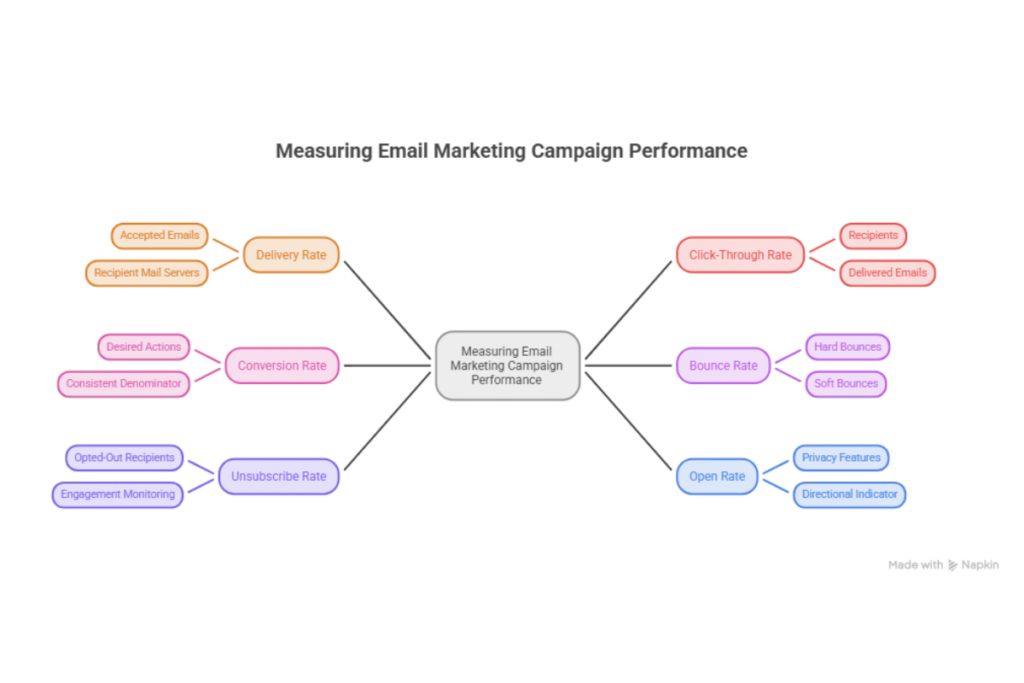
Measuring performance helps you understand whether a campaign achieved its goal. The most useful metrics depend on what you want subscribers to do.
Delivery rate
Delivery rate indicates the proportion of sent emails that were accepted by recipient mail servers. An accepted email is not necessarily placed in the primary inbox.
Click-through rate
Click-through rate measures the proportion of recipients or delivered emails that clicked a link, depending on the platform’s calculation method. Check the definition used by your provider when comparing results.
Conversion rate
Conversion rate measures how many recipients or visitors completed a desired action, such as purchasing a product, submitting an enquiry, or booking a consultation. Define the denominator consistently when comparing campaigns.
Bounce rate
Bounce rate indicates the proportion of emails that could not be delivered. Hard bounces generally involve permanent delivery failures, while soft bounces may be temporary.
Unsubscribe rate
Unsubscribe rate measures the proportion of recipients who opted out. Monitor it alongside complaints and engagement to understand whether your email frequency, content, or audience targeting needs improvement.
Open rate
Open rate estimates how many recipients opened an email, but privacy features and automated image loading can affect its accuracy. Treat it as a directional indicator rather than definitive proof of engagement.
Use campaign links with suitable tracking parameters and measure relevant website actions in your analytics platform when appropriate. This helps connect email activity with actual business outcomes.
Common Email Marketing Campaign Mistakes to Avoid
Even well-designed campaigns can perform poorly when basic practices are overlooked.
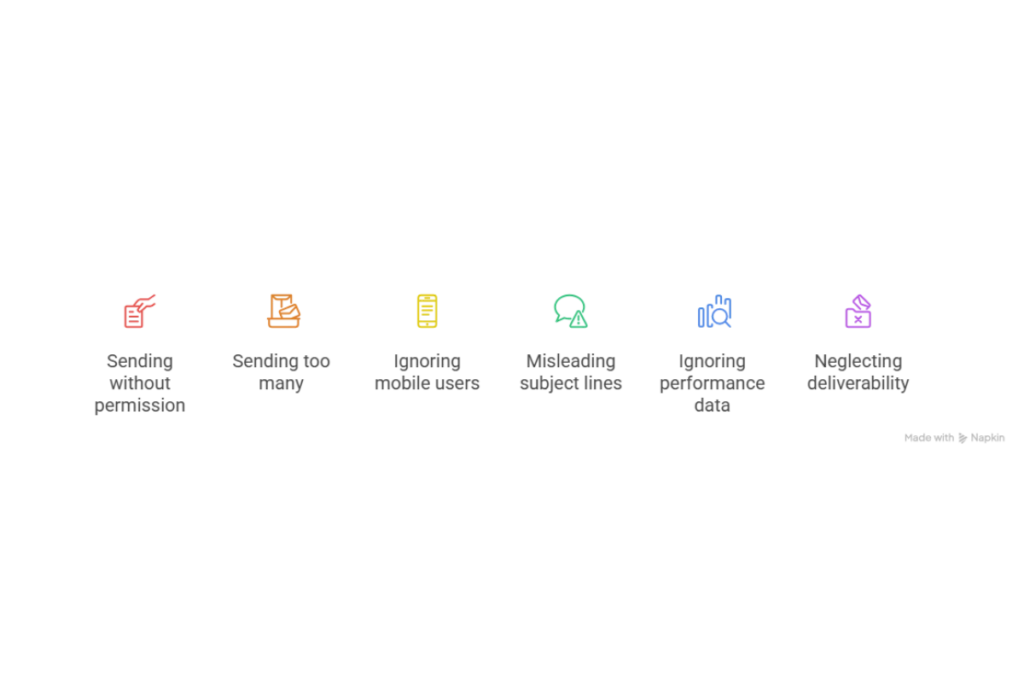
Sending emails without appropriate permission
Build your list through appropriate sign-up methods and follow the marketing and privacy rules that apply to your audience. Do not assume that having an email address automatically means you have permission to send promotional messages.
Sending too many emails
Excessive or irrelevant messages can lead to unsubscribes and complaints. Set clear expectations about frequency and send content that provides value.
Ignoring mobile users
Test your emails on smaller screens. Use readable text, responsive layouts, accessible buttons, and links that are easy to tap.
Using misleading subject lines
Make sure the subject line accurately reflects the email. Misleading urgency or exaggerated claims can damage trust.
Ignoring performance data
Do not continue sending the same campaign without reviewing its results. Identify what worked, what did not, and what you can test next.
Neglecting email deliverability
Use appropriate domain authentication, maintain good list hygiene, and follow the sending requirements of your email provider. Good practices improve the chances of successful delivery but cannot guarantee inbox placement.
Email Marketing Campaign Best Practices
Use these practices to make your campaigns more relevant, measurable, and useful.
- Set one primary goal: Make the intended action clear.
- Segment your audience: Send relevant content to appropriate subscriber groups.
- Personalize responsibly: Use accurate information only when it benefits the recipient.
- Test campaign elements: Compare subject lines, content, CTAs, and send times when you have enough data.
- Use automation thoughtfully: Set up welcome emails and other relevant workflows where they genuinely help subscribers.
- Make emails accessible: Use readable text, meaningful link labels, and appropriate alternative text for informative images.
- Respect subscriber preferences: Provide an easy way to unsubscribe and honour opt-outs promptly.
- Review performance regularly: Focus on the metrics that match your campaign objective.
Frequently Asked Questions
What is an email marketing campaign?
An email marketing campaign is an individual email or planned sequence of emails designed to achieve a specific goal, such as promoting a product, sharing information, generating enquiries, or retaining customers.
What are the main types of email marketing campaigns?
Common types include welcome campaigns, promotional campaigns, newsletters, abandoned-cart reminders, and customer re-engagement campaigns. The appropriate type depends on the business goal and subscriber journey.
How do you create an email marketing campaign?
Define your goal, select the audience, choose an email platform, write the content, add a clear CTA, test the email, send it appropriately, and measure the results.
How often should a business send marketing emails?
There is no universal ideal frequency. It depends on subscriber expectations, the type of business, and how often you have useful information to share. Set expectations during sign-up and monitor engagement, unsubscribes, and complaints.
How can I measure the success of an email marketing campaign?
Measure outcomes that match your goal. These may include clicks, enquiries, purchases, conversions, delivery failures, and unsubscribes. Open rates can provide context but may be affected by privacy features.
Is email marketing suitable for small businesses?
Yes. Email marketing can help small businesses communicate with interested audiences, share useful information, and promote relevant products or services. Success depends on audience quality, content relevance, implementation, and measurement.
Conclusion
Email marketing campaigns help businesses communicate with subscribers, share useful content, promote offers, and build customer relationships. The key is to choose a clear goal, understand your audience, create relevant emails, and measure outcomes that matter to your business.
Start with one campaign that solves a specific problem or communicates a useful offer. Review the results, learn from the data, and improve your next campaign.
Need Help With Your Digital Marketing Strategy?
BrightYou helps businesses explore practical digital marketing strategies to improve their online presence and connect with relevant audiences.
If you need help planning your website content or broader digital marketing strategy, visit BrightYou to learn more about our approach and available services.
AI tools can also support digital marketing tasks such as content creation and campaign planning. Learn more in our guide to AI in Digital Marketing.https://www.brightyou.in/ai-in-digital-marketing/